
or when only polar bears still feel comfortable visiting me
Winter is approaching. Who wants to freeze? Certainly not me. But how exactly do I manage that? Cost-effective, efficient and well prepared for all possible horror scenarios when it comes to the availability of “raw materials” or energy for heating?
That ominous heat pump is not an option for me, and that is a good thing.
Anyone who lives as a permanent camper like I do on a campsite in the woods has to think about this a lot more than someone who just goes on a short winter holiday.
The topic of being away is also a very delicate one, because what happens if you are not there for a few days and then it turns bitterly cold? Frozen pipes are the last thing a permanent camper like me needs. That becomes very unpleasant and very expensive. Especially since you have to ask yourself when you will get an appointment for the repair. These days, even as a “self-paying customer”, you sometimes have to wait months. It is already just like getting a doctor’s appointment.
That is why I looked at the options—gas, electric, paraffin and infrared heating—and then decided on a solution.
That is what this blog post is about.

Cold? Without your own fur, constantly bundling up and snuggling under a blanket is not an option
My requirements
Create options
The power is out. There is no more gas. Paraffin is no longer affordable! Sounds like a worst-case scenario—and it probably would be.
Sure, if all of these things happen, I will not be the only one kicking myself. That is why it makes sense to be able to draw on a mix of different heat and energy sources.
Below, I describe the different options with all the relevant pros and cons. Only by weighing them carefully can you make a truly sensible decision.
The different options in detail: pros and cons
Gas heating
Gas is the standard form of heating on campsites. You always have gas cylinders with you, and this heating system is installed as standard in every vehicle or caravan. Buying or refilling is not possible everywhere, but exchanging cylinders is possible almost everywhere. The existing ventilation ducts allow the heat to be distributed throughout the entire consulting motorhome.
Pro: Already installed in the vehicle; gas is available everywhere and cylinders can be exchanged
Con: Costs not yet known, possibly high; gas cylinders should be kept in reserve. Alleged condensation in winter (I have no experience with this yet)
Electric heating in combination with gas heating
Some manufacturers, such as TRUMA, offer a Combi with gas AND electric heating. This gives you heat and hot water from two energy sources in one system. Otherwise, it is comparable to the gas heating mentioned above.
Pro: Two energy sources in one. Provides heating and hot water
Con: Cost of the heater —. Heating with electricity only works when shore power is connected.
Paraffin heater
An alternative that I have been hearing about more and more in my research. It is also suitable for ventilated indoor spaces. In a test, I found that there is only a minimal paraffin smell at the beginning, but it dissipates immediately. The heat is very pleasant. The unit can easily be placed in different locations in the consulting motorhome. (By the way, it is also suitable for apartments.)
Pro: Purchase cost ++. Lightweight and can be placed in different locations. Can be “stored away” in summer, e.g. in the shed.
Con: Paraffin costs in Germany — compared to France; ventilation should be ensured. Requires electricity.
Infrared heating
At first glance, a stylish and modern alternative. But installation is tricky—and the electricity costs probably are too. In any case, you have to check whether you have the right surfaces for installation and what the opposing radiant surfaces look like. That is why it does not fit in most motorhomes. It would have fit in mine. But unfortunately, nobody wanted to install such a heater because everyone is afraid of possible heat build-up behind the heater on the wooden surface in the vehicle. In any case, this is the most expensive option to buy if you want a German quality manufacturer and not some cheap China stuff.
Pro: Provides pleasant warmth. Looks stylish
Con: Price —, requires installation and an opposing radiant surface; nobody wants to install it due to possible heat build-up on the rear wall; potentially a safety/insurance issue; electricity costs; campsites may shut it off due to the high power demand/electricity consumption (already throttled on many)
The electric fan heater / electric heater.
You know this type of heater from home when you need a bit more warmth. Inexpensive to buy and flexible in terms of where it can be used. With larger units, the question is where to put them.
Pro: Price +++, small and handy, can be stored anywhere, movable in the vehicle/caravan, can be “stored away” in summer (shed)
Con: High power consumption. More than one is necessary, depending on the size of the vehicle/caravan
Initial cost comparison
Electricity at the campsite: €0.60 per kW – demand unknown (be sure to install a meter with an app so you can see daily consumption)
for 5 months approx. ?
Gas cylinder 11 kg: approx. €38.00 – demand approx. 4 cylinders per month? (I have heard this in various videos)
for 5 months approx. €760.00
Paraffin: 20 litres approx. €40.00 in France, approx. €80.00 in Germany – demand approx. 10 x 20 litres for the season? (figure comes from my neighbour)
for 5 months approx. €400.00
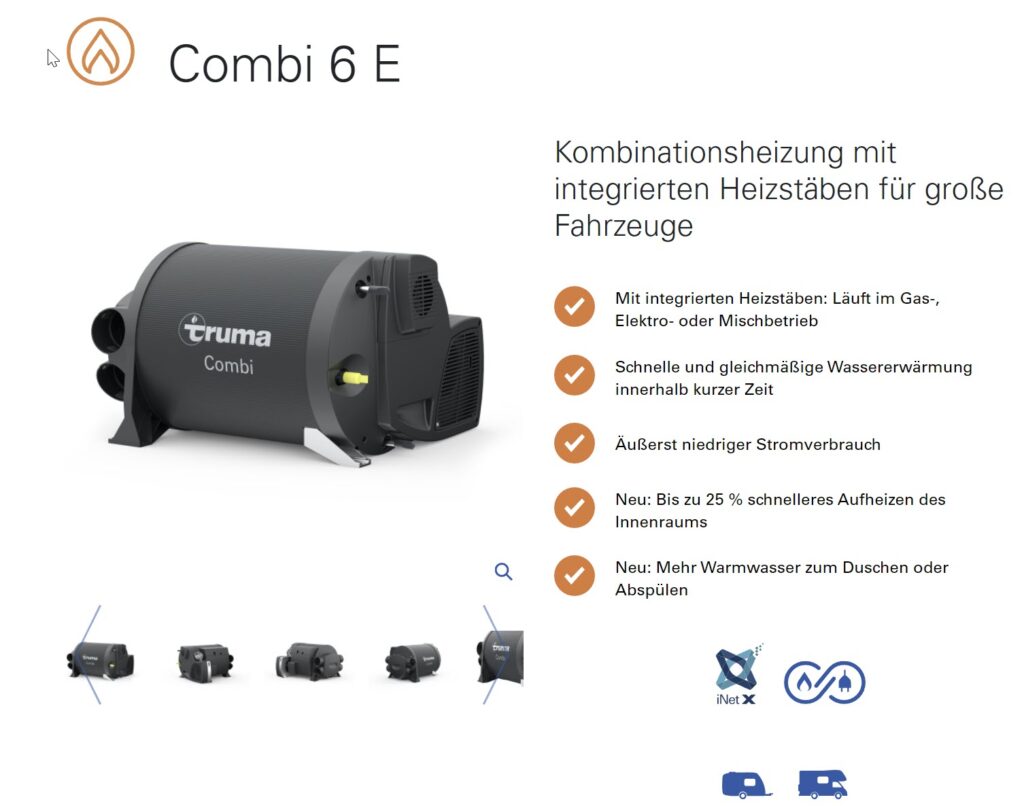
Installed in my vehicle: a TRUMA COMBI 6E
Always be the first to receive the latest news, interviews, and expert articles?
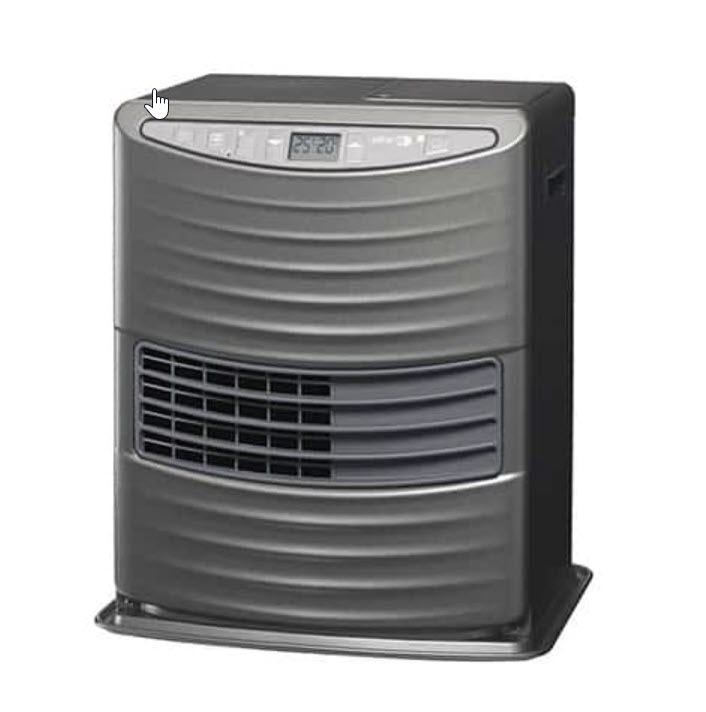
The paraffin heater.
A few more winter tips
In addition to heating, you should really remember to do everything you can to prevent anything from freezing, or to feel less cold
- Winter covers for the refrigerator vents on the outside of the vehicle
- Heater for the wastewater tank (mine switches on automatically at 5°C)
Still in planning for me
- Outdoor carpet under the vehicle (as in the pavilion/outdoor office; reduces some of the cold from the concrete blocks under the vehicle)
- Air hoses under the vehicle (block wind and therefore cold)
- Additional insulation under my sofa in the rear garage to minimise rising cold
By the way:
- The vehicle has a “double floor” and is therefore suitable for winter
- The water tank is inside the vehicle, under the large seat of the front seating area, and is therefore protected from freezing by the warmth inside
- If the power goes out, the gas or paraffin heater will not work either. Therefore: enough battery power. I already have 480 Ah, i.e. around 6 kW, but will probably increase that. Alternatively, in an emergency, the paraffin heater from my outdoor office in the pavilion can be used without electricity, or I will have to warm up at my neighbour’s. She also has a wood-burning stove in her permanent winter awning.

Decisions like choosing the right heating method can really weigh on you
Conclusion:
The more options, the better. That definitely applies to heating here.
That is why I decided on the following mix:
- Gas/electric combi heater
- Paraffin heater
Depending on location, availability and the cost of the energy sources, I can now decide what will keep me cosy and warm. That is quite different from an apartment, where you usually have one heat source and depend on it.
The options I have chosen give me the greatest possible freedom, but also security.
And… no, I did not receive any money or other benefits from any of the manufacturers mentioned for this blog post.
In spring, I will then report in detail on my winter experience, including the associated costs.
Heating options including cost breakdown are always good
Image sources: TRUMA, Unsplash, Zibro