
Digital-only payments are not a good idea. (CBDC and the like) A personal experience report!
It was supposed to be a pleasant evening. After the customer appointment, off to the motorhome parking area and then to the Beuren thermal baths.
Nice place, nice thermal baths (or so I thought). So I drove straight onto the almost empty parking lot.
A pitch was quickly found. So off to register and, of course, pay.
But then came the surprise: CARD ONLY. NO CASH. I do not like that at all—because I want to know this before entering.
(who actually reads the fine print on a website)
Well then, I thought. Let’s pretend nothing works here anymore. First, I inserted a card I had blocked myself into the slot (I thought it had been lost). Of course the payment did not go through—what else.
Now imagine that was the only card I could pay with. What then? I have enough cash with me. Just no other cards.
Anyone who suddenly ends up in a situation like this has a problem. You cannot get out of it that easily. On foot, certainly—but not with a motorhome. At that point, you are stuck.
What I experienced next—and how providers or customers can avoid such problems—read in my post. It is going to be exciting again!
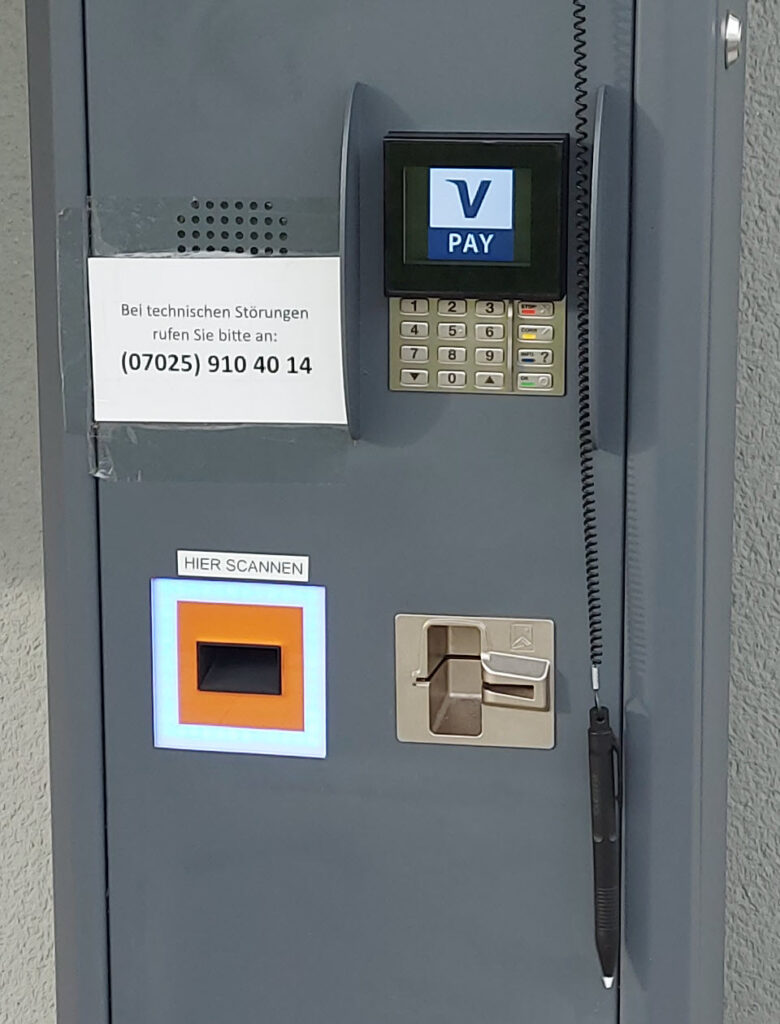
It is digital-only here—or not at all!
Ill-considered digitalization and its consequences
First, a call to the “hotline”. Fortunately, someone was still available. The pitch belongs to the tourist office in Beuren.
If you look at the website, you would think, hey, it all seems interconnected. (thermal baths and pitch)
So my simple thought was: go to the thermal baths across the street, pay cash at the counter, and done. But unfortunately, that was wrong.
The friendly gentleman on the phone made it clear to me that one has nothing to do with the other. So I cannot simply pay that way.
And cash payment is not предусмотрed at all—really not. It only works with a card.
Well, actually also with PayPal, but not at the machine—only in the app, which I can access via a QR code on the power pedestal at the pitch. Not at the payment machine.
Yes, you read that correctly. At the machine it works one way, via the app another—but the two are not coordinated with each other.
So off to the pedestal. And now here is the thing (and this was not fake): someone had debited money from my PayPal account and I was in the red.
Accordingly, no payment via PayPal was possible, which I wanted to try right away. Very annoying.
No problem, I thought—I will simply make a direct transfer from my bank account. The amount will be in my PayPal account within minutes and I will be able to pay again.
Think again. I wait and wait, then contact PayPal. “Sorry”, says the PayPal representative, “but allocating it to your PayPal account can take 2 to 3 days. It is not that fast with us because there is a pooled account and the deposit first has to be assigned to your account” (apparently manually!).
Why, I ask myself, does PayPal accept a direct transfer if it cannot actually process a direct transfer. This should be automatic. (with other banks you get a message during payment that this process does not work with the bank)
I am increasingly doubtful whether we are talking about digitalization that is supposed to make life easier—or banking in Taka-Tuka Land (see Pippi Longstocking).
The fact is: my Postbank money is gone and, to this day—7 days later—still has NOT arrived in my account.
I feel like PayPal is taking me for a fool.
Good thing that part of it was still “staged” and I did have a working card I could use to pay. Just imagine if that had not been the case.
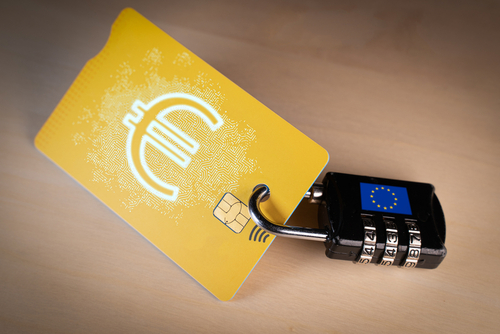
Digital money can be “locked up” very easily. And with it—indirectly—so can we!
Why digital payments can be problematic
You are probably wondering why I am making such a fuss. It has always worked, and an occasional error is something you can live with.
True—if it were only an error. But in the future, it may be intention rather than a mistake. And why?
Reasons currently known for a payment problem:
- Insufficient funds in the account
- The bank has closed the account
- The tax office has frozen one or all accounts
- The bailiff has frozen one or all accounts
New, future reasons
- The new social credit system says you are not allowed to consume that (product, service, etc.)
- By receiving the service, you exceed your limit on the CO₂ account. The purchase is prohibited.
- The digital euro in the wallet can simply be “switched off” or deleted if the friendly controller does not like it
Anyone who thinks I am making this up—unfortunately, I am not. Through acquaintances, I am aware of projects that banks are working on, for example in the context of the CO₂ account and payment apps. In fact, everything is already finished.
Why can you already assign a payment or income to a category in the account statement at many banks? (e.g., rent, insurance, etc.)
This is only ostensibly for customer convenience, but rather to train AI so it can group payments more easily.
In the end, the fuel bill serves to provide data to the CO₂ account. If you refuel too much because you drive too much, you have a problem.
CO₂ budget used up. Time to start walking again!
Already > 1 year ago, I pointed this out in a LinkedIn ® post. Here is the link.
And ultimately, it must be clear that you remain anonymous when paying cash. Transactions made with cards are not.

The eBay CO₂ account—gone again? But surely still there in the background!
Always be the first to receive the latest news, interviews, and expert articles?
Now a few questions arise
- Is everyone at the tourist office in Beuren really so naive as to think that digital processing always works?
- Has nobody ever considered what happens when a guest arrives who genuinely has these problems?
- Is there really no backup system at all that allows these processes to be handled manually as well?
Apparently not. What a disgrace. Once again, they put a fool in charge of the garden—or rather made someone the “digitalization officer” who can barely think beyond the end of his nose.
Should the “convenience” of electronic payment really be put above EVERYTHING? I think that is wrong!
Because if you look at the inconvenience and calculate the extra effort I had—just because nobody considered errors in the process anymore—then the whole thing is more of a “damp squib”. (at least in this case)

Those who are prepared for emergencies live with less stress
However, there are also emergency solutions to avoid this problem
For end customers:
- Get a prepaid credit card and load it accordingly for emergencies.
- Ideally not from one of your banks, but some other provider—possibly even from abroad.
For the “seller”
- Define an analogue process that also ensures cash payment
- Install ONLY machines that still accept cash
- Provide an emergency power supply so the machine works even during a power outage
- Find a way to open the barrier during a power outage without having to resort to destruction
Be prepared for emergencies: We can help you
Handling everything digitally and without an emergency plan is unfortunately not a good idea. If you do not want to leave yourself and others out in the rain, we will be happy to help you create an emergency concept that “keeps the business running” even when digital processes stop working smoothly.
For a free initial consultation, simply request an appointment here via the link. It is definitely worth it!
Conclusion: If you want to keep using cash, it is best to avoid services that can only be paid for by card—and make sure to tell the seller as well. Otherwise, things will soon look very bleak on the cash front!
Image sources: created in-house, Shutterstock