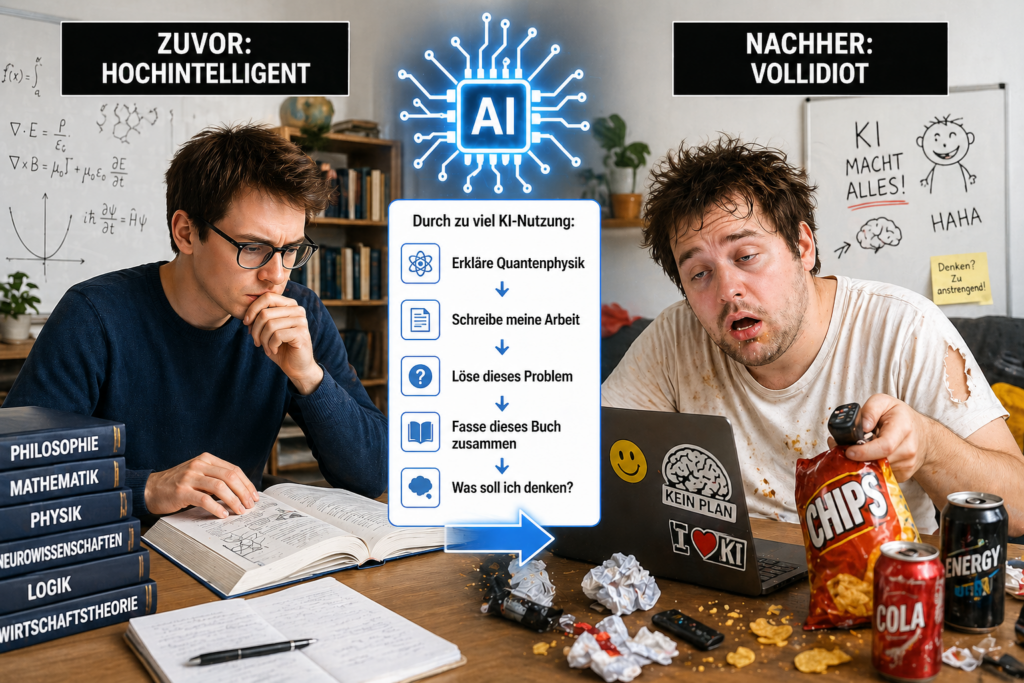
Digitalization and AI. Today’s topic:
AI without a plan: from efficiency booster to chaos factor—or are you currently creating your “egg-laying wool-milk-sow”?
The illusion of the “perfect AI”
Expectations of artificial intelligence are enormous: increase efficiency, reduce costs, automate processes, fill staffing gaps, establish new business models, etc., etc.
But the reality in many companies usually looks very different:
- Tool chaos
- rising costs
- declining productivity
- complete lack of planning
The reason is rarely the technology itself, but rather the lack of an overarching strategy.
Because the self-proclaimed “AI experts” boast to the high heavens and often lead decision-makers down a short-term path to success that can look quite impressive at first glance.

The famous egg-laying wool-milk-sow!
The AI egg-laying wool-milk-sow, or “AI will solve all our problems.”
“Fear is a poor advisor.” A saying we all know. The fear of being left behind someday without AI fits perfectly—and leads to a dangerous mindset:
- A sprawling tool landscape is supposed to do everything
- No clear specialization is apparent
- Overload for systems and people
Result: AI becomes the “egg-laying wool-milk-sow”: in theory everything is great, but in combination it does nothing properly in practice.
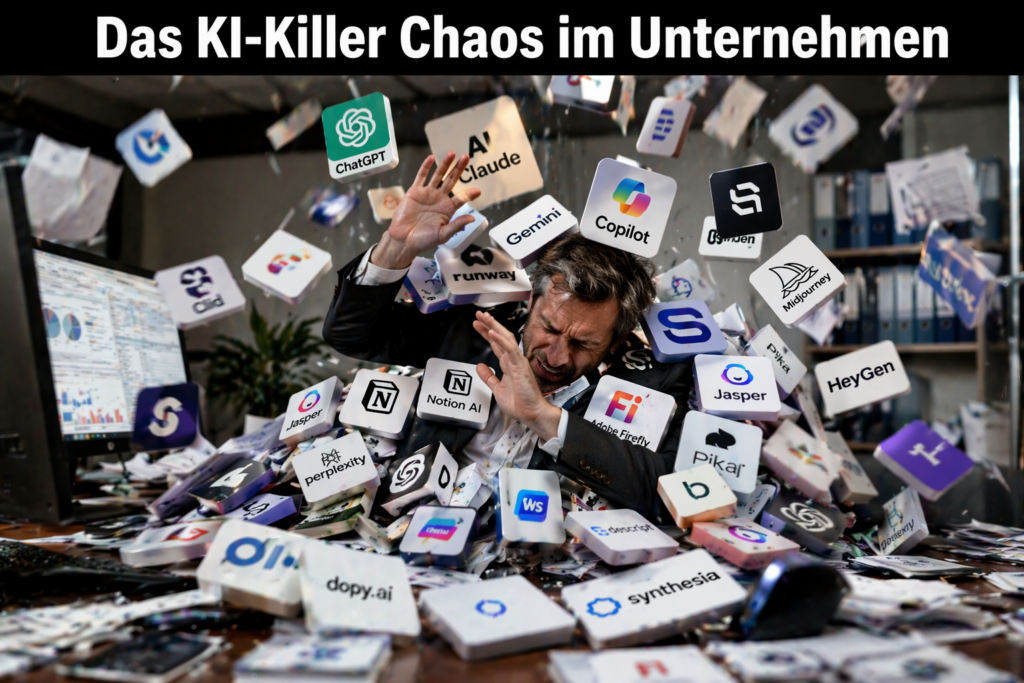
The AI-killer chaos of too many tools
AI-killer chaos in the company
Without a clear strategy, this is exactly what happens:
- New tools are constantly being tested
- Teams use different systems
- Processes are optimized in fragmented ways
Typical symptoms include:
- inefficient workflows
- duplicate work
- data inconsistency
- lack of scalability
Especially critical: Many companies confuse using tools with AI-based digitalization.
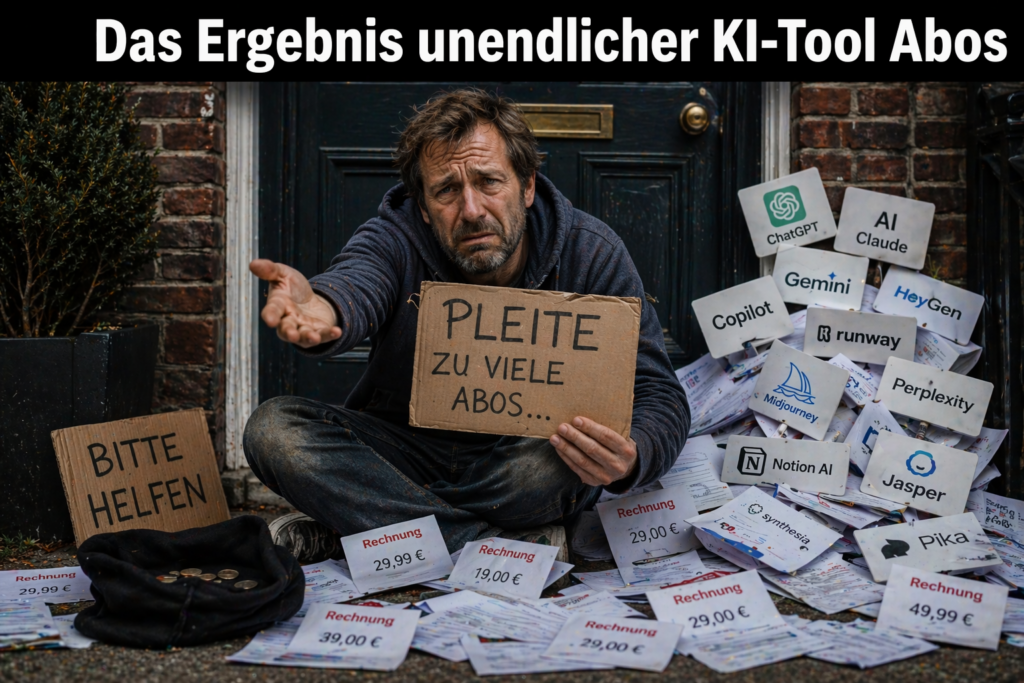
The result: endless AI tools
The result: endless AI tool subscriptions
A factor that is often underestimated: cost explosion
- 10–20 tools in use in parallel
- monthly subscriptions add up and usually cannot even be calculated correctly
- no clear ROI—if any at all—“Long live gut feeling”
The result:
- rising fixed costs
- declining profitability
- lack of transparency
Classic mistake: tools are purchased before the use case is clear.
The AI marriage seems very inexpensive at first, but the divorce is an expensive and time-consuming affair in the end—especially if extensive integrations have already been implemented.
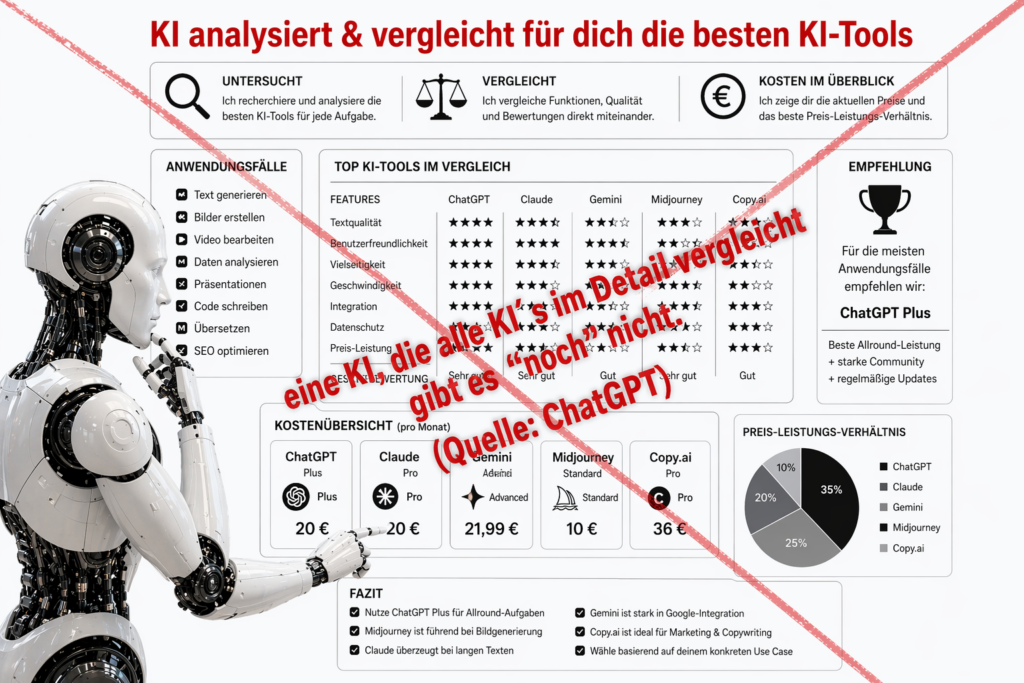
There is no meta-AI yet
The hard truth: the “meta-AI” does not (yet) exist
Wouldn’t it be fantastic if an AI automatically consolidated all other AIs into an overall analysis?
That is why many people want an AI that automatically:
- analyzes all tools
- compares them
- assesses the costs
- selects the best solution for the respective business case
- shows how to integrate existing AI solutions into the new one
But in reality, things look very different, because: This “meta-AI” does not currently exist.
Why?
- too many dynamic tools
- different use cases
- lack of standardization
What is the consequence? The strategic decision remains with the human.
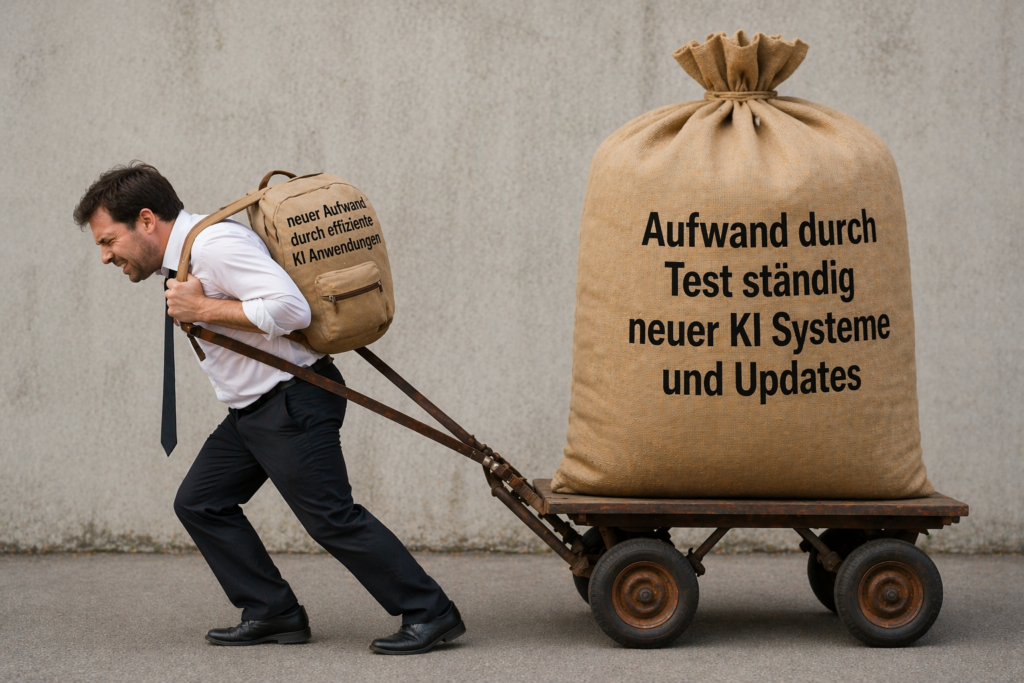
The underestimated effort
The real effort: not the AI—but everything around it
The biggest misconception: “AI automatically saves time”
In reality, this very often results in:
- significant testing effort
- constant tool switching
- update and learning effort
The actual “invisible effort” is:
- evaluating new tools
- projecting costs over X years
- integration
- training
- maintenance
Insight: Overhead often grows faster than the benefits.
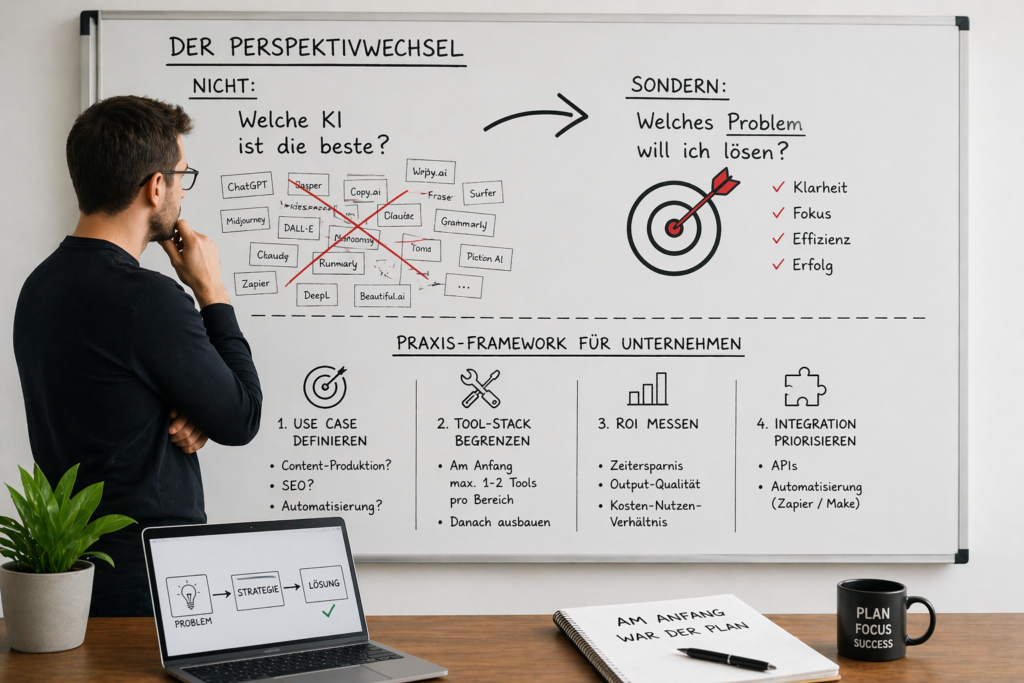
AI needs to be planned
The solution: fewer tools, more strategy
The decisive shift in perspective. A rethink in decision-making is necessary.
Not: “Which AI is the best?” But: “Which problem do I want to solve?”
Practical framework for companies
“In the beginning, there was a plan” should really always be the motto. Only the right approach delivers lasting success with the corresponding positive consequences. This is the only way to ensure that the AI advantage in Department A does not become a disadvantage in Department B.
- Define the use case
- Content production?
- SEO?
- Automation?
- Limit the tool stack
- At the start, max. 1–2 tools per area
- Then expand
- Measure ROI
- Time savings
- Output quality
- cost-benefit ratio
- Prioritize integration
- APIs
- Automation (Zapier / Make)
Always be the first to receive the latest news, interviews, and expert articles?
Conclusion
AI is not a self-starter. Automating a little “here and there” and building dozens of isolated solutions can deliver selective—albeit impressive—results. In the end, however, without an overall concept, 1 + 1 may not equal 3, but in fact simply 1 again.
Because without a strategy, it becomes:
- complex
- expensive
- inefficient
With the right approach, it becomes a real competitive advantage
If you want to make AI a real success in your company, you should seek advice from process and AI experts and develop an appropriate strategy.
That is exactly where I come in. Simply book a free initial appointment so we can identify the added value of working together.
You can book an appointment via this link: https://www.der-digitalisierungsberater.de/terminvereinbarung/
Image source: ChatGPT