Artificial intelligence needs more human intelligence than ever before
Why many AI projects fail — and what I really saw at LogiMAT
- 3 days at LogiMAT in Stuttgart.
- 18 software vendors.
- One clear goal: Find out where AI really stands today — between hype and reality.
My conclusion upfront: Many companies massively underestimate one critical risk.

“Why should I care?”
The big illusion around AI
Right now, you hear statements like this everywhere:
- “AI makes you independent”
- “AI replaces missing know-how” (one AI nerd is enough)
- “AI is quick to implement”
- “AI saves time and costs”
Sounds convincing, but in practice it is often dangerously oversimplified.
The reality: Many companies start AI projects without:
- clear use cases
- robust ROI assessments
- deep process understanding
The consequence: High resource investment with little or no business impact
The biggest fallacy: “We will just do it ourselves with trendy young AI experts”
A common scenario:
A company invests in AI tools, assigns internal teams to them, and expects quick results.
What gets overlooked: AI is not purely a tool topic.
AI is a strategy and process topic
Without experience in:
- process analysis
- system landscapes (ERP, WMS, CRM, TMS)
- implementing complex requirements
solutions emerge that may work technically, but do not deliver sustainable added value.
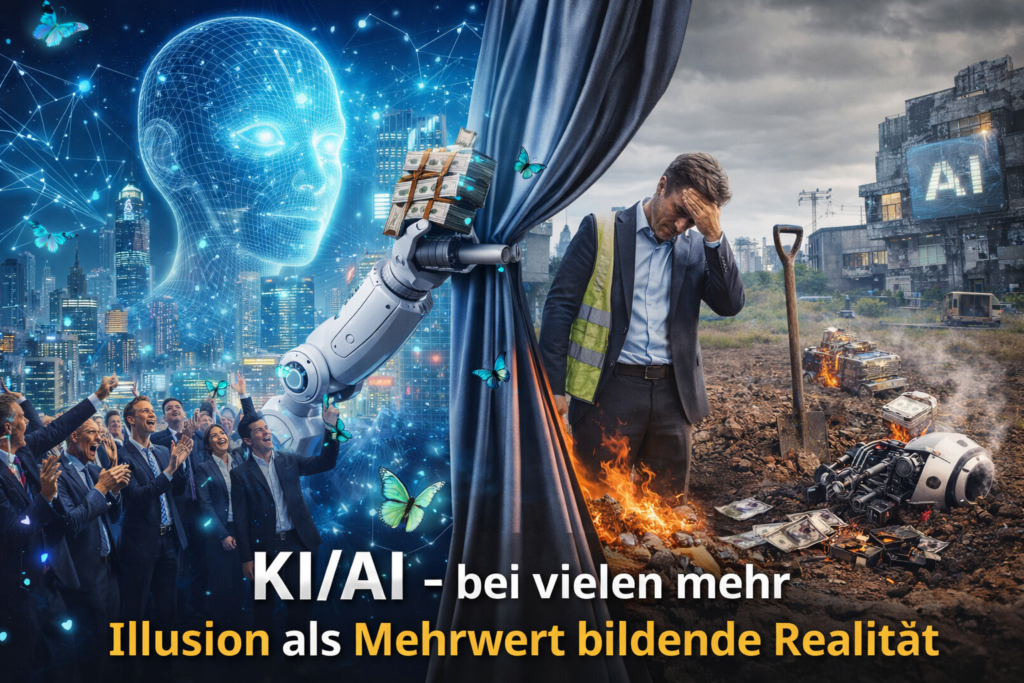
AI — for many, more illusion than value-creating reality
The “old hand syndrome” – a key takeaway
At the trade fair, one term came up that sums up a lot:
The “old hand syndrome”
The key message: It is much easier to teach experienced experts AI than to give AI experts real hands-on experience.
Why is that? Because:
- experience cannot be replaced by theory
- processes must be understood, not just tools
- decisions require context and industry knowledge
An example straight from the trade fair:
A major logistics company is deliberately no longer relying primarily on junior profiles for AI projects, but specifically on experienced specialists.
The reason: They know where, how, and when AI can be used effectively — and where it cannot — and can therefore deliver real added value.
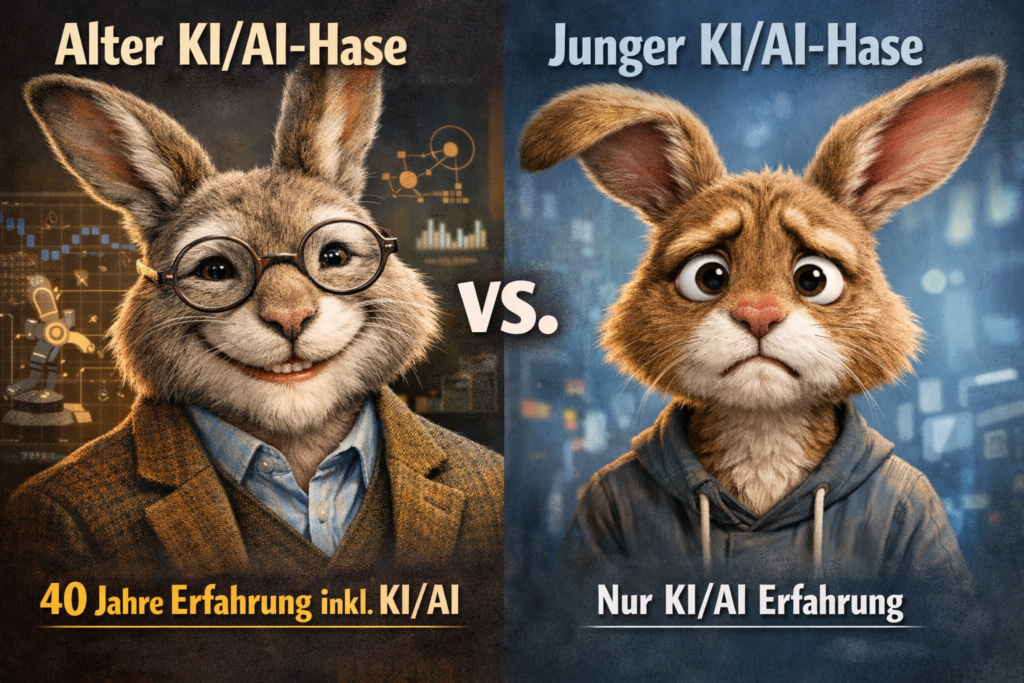
The “old hand” wins!
What I observed specifically at LogiMAT : Of 18 vendors, exactly ONE truly convinced me.
Not primarily because of the AI technology, but because of the methodology behind it:
- clear architecture
- clean integration into existing processes
- traceable implementation
- presented results
And above all: a deep understanding of real-world application in the company
Conclusion: AI without experience = an underestimated risk
Many companies assume: “AI compensates for missing experience”
That is a fallacy. AI can:
- support
- accelerate
- automate
But AI cannot:
- independently understand and verify complex business processes
- correct strategic misjudgments based on “what worked before” experience
- replace the missing experience from 40 years of work that is often stored only in employees’ heads!
The hidden costs of trial & error
What is often underestimated: Misguided AI projects lead to:
- bad investments
- inefficient processes
- an explosion of process variants
- unnecessary resource consumption
- technical dead ends
And these effects occur in practice far more often than many expect.
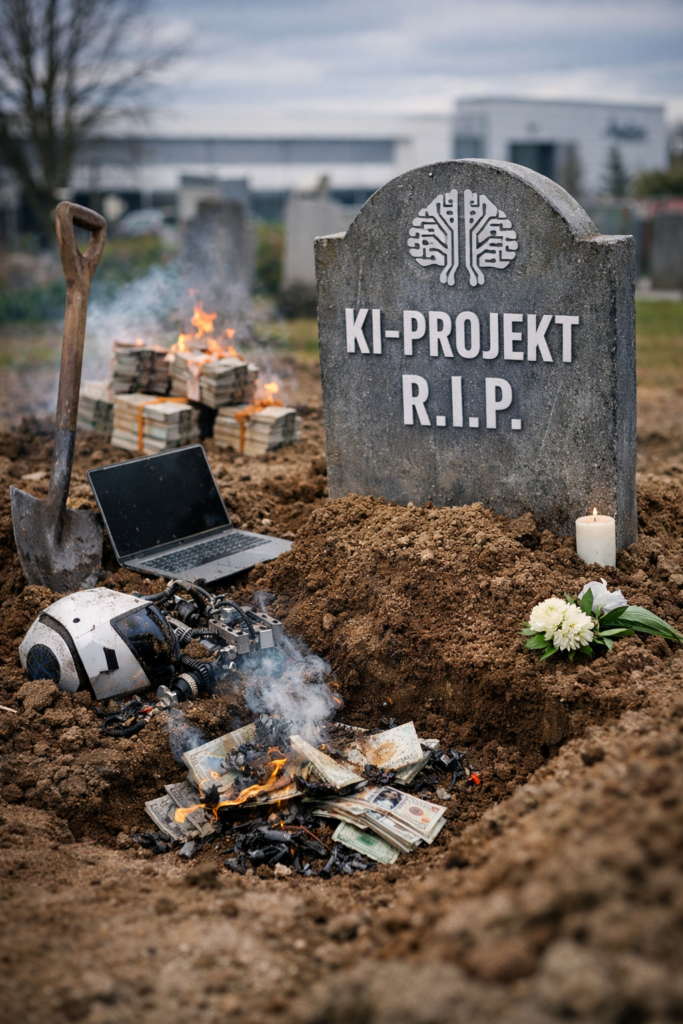
Wrong AI decisions without HI can lead you to the graveyard.
The market is changing — and so is your responsibility
A key trend: Software vendors are increasingly evolving into enablers.
That means:
- You get powerful tools
- but less hands-on support with implementation
Responsibility for correct application increasingly lies with you. And with it, the risk.
If AI delivers solutions that quickly, no vendor wants to deal with it “minute by minute.” They want to enable you to do it independently!
The crucial question: Does your company have the necessary experience to use AI strategically and effectively?
Or more specifically: Are you sure your current AI approach is economically sound and sustainable?
Conclusion
AI only unlocks its full potential when it is built on:
- solid experience
- structured processes
- a clear strategic direction
.
That is why: 1 (AI) + 1 (human intelligence) = 3
but only if both factors are combined correctly.
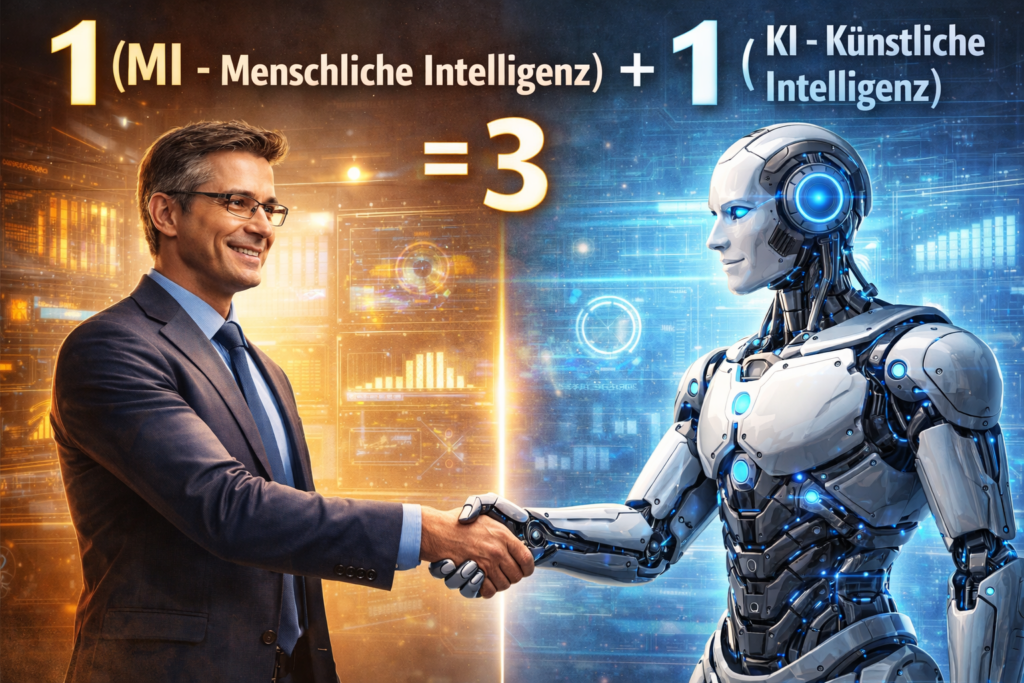
1 + 1 = 3 — that applies especially here!
Recommendation for action, if you are currently:
- planning to use AI
- have already launched initial initiatives
- or are unsure whether your approach is viable
you should not leave this topic to chance.
Your next step
I offer you a free initial assessment of your AI strategy:
- Assessment of your current starting position
- Identification of specific risks
- Initial recommendations for action
Book your appointment now and gain clarity. Here via the link. https://www.der-digitalisierungsberater.de/terminvereinbarung/
Here is the link to LogiMAT, for anyone who does not know the trade fair. https://www.logimat-messe.de/
Always be the first to receive the latest news, interviews, and expert articles?
Conclusion:
Even with AI, nothing is really moving forward right now without HI—human intelligence. So do not underestimate the “old hand factor” under any circumstances, and make the 1+1 = 3 decision!
Image source: ChatGPT