Is everything really gold that glitters?
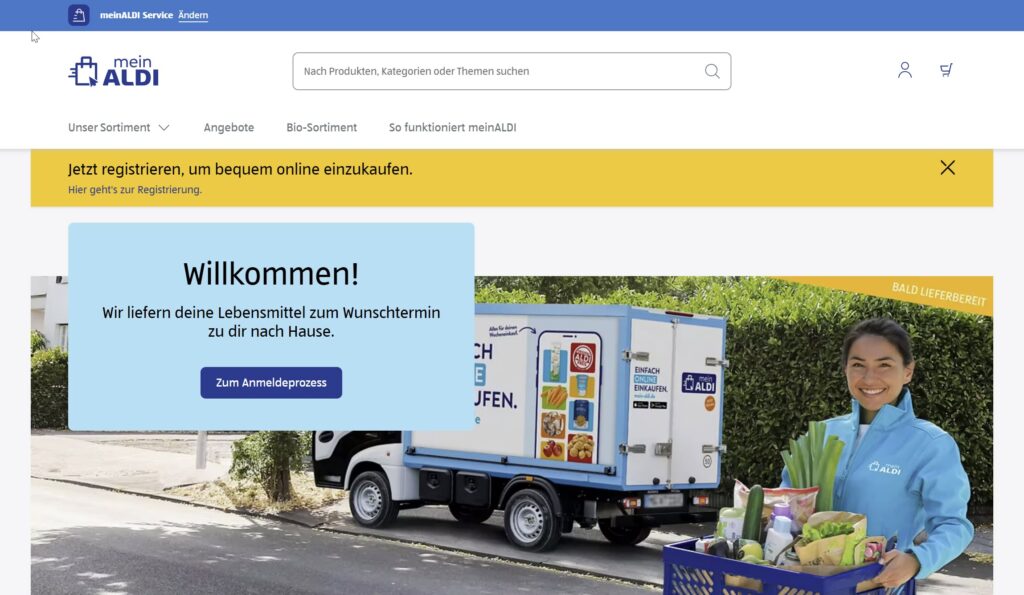
Now it is being tested. The new delivery service from Aldi. Sounds good at first. No more shopping in the store, no long lines. The tedious process of removing items from shelves into the shopping cart, then onto the conveyor belt, then into bags or back into the cart, then into the car and again into a transport container is eliminated. My goodness, that is great. Or is it?
As an argument, the same old topics always come up. Environment and such.
In this blog, we want to address the topic of home delivery, which would not be possible without digitalization and the corresponding logistics, and critically examine the background.
An apple for the project manager and mentor is only given when everything runs smoothly
It is not the first, but it will not be the last discounter or grocery chain to offer home delivery.
But why? The stores are usually quite full. Who does not know the nearest Aldi or Lidl nearby? Even here where I live, in the forest, at the campground. Both options plus a Wasgau (Rewe) or Netto are only max. 7 km away. (6 of which, by the way, go through the forest).
It would be great if at some point everyone delivers to me and I can just lie lazily in my deck chair and let the sun (if available) shine on my belly.
The ideal consumer. Just order, pay, and consume, then order again.
As an incentive, there will certainly be extra points in some app so that the AI can conveniently pre-select my next order. Oh my goodness, how comfortable.
Transparent? Oh, I have nothing to hide, do I?
But now, joking aside, although this is not really funny at all, let us ask ourselves whether they are really so “people-friendly” or is there something completely different behind it?
Of course, now the CO₂ argument comes up immediately 😉 Well, there are two opinions on that, and that is not the topic here today.

Not delivered by a drone. Not “tested” beforehand. What are the current return rates in Germany? And are they good for the environment?
Always be the first to receive the latest news, interviews, and expert articles?
But what then? And as I think about it, the Agenda 2030 suddenly comes to mind again. From the “philanthropist” Klaus Schwab (WeForum) and the great sustainability and that everything will look quite different by then.
In the video “8 predictions for the world in 2030”, you can find the real reason. Not only that we will own nothing anymore, meaning rent everything and be happy, but also that we will have everything delivered to our door. (yes, read that correctly, own NOTHING anymore, rent EVERYTHING)
See here in the video from 2016! https://www.facebook.com/worldeconomicforum/videos/8-predictions-for-the-world-in-2030/10153920524981479/
(Anyone who watches this, by the way, will understand much better what is going on here today)
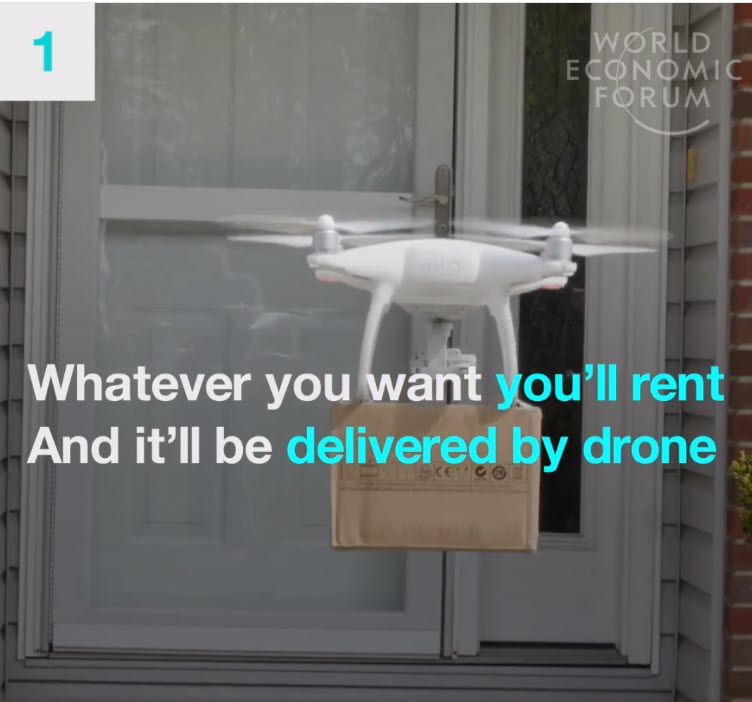
Oh, how great, everything will be delivered. Even if it does not belong to me!
Now it is out! The part of this agenda that people should not go shopping anymore!
Okay. Is this convenience now or what?
At the latest now, one should ask several questions:
Do I want this?
Do I not want to touch or smell my vegetables anymore?
Feel the fabric or experience the weight?
Do I not want to meet friends or neighbors while shopping anymore?
Talk to the butcher I trust, and let my daughter (if I had one) have the usual piece of Gelbwurst put in her mouth?
Personal experiences and communications, interaction with other people LIVE and on-site are what humans need to survive.
And that is soon to be taken from us. Or rather, we let them take it from us because we are simply too lazy and because it all sounds so “good” at first. I do not find that good at all!
By the way, the diligent work on the abolition of cash or universal basic income fits right in. The drone certainly does not have a slot for inserting bills and coins, like the cash box at my farmer’s, where I go into his mini-store on a trust basis, take the products, and throw the money into the box.
I want to continue being able to do such things, even if I have to drive 20 km for it.

In the 15-minute city, there is everything you need.
You can manage without a car, whether you want to or not. And you should not drive in and out too often. Apparently consumes too much CO₂.
But there is already a solution for that, because 20 km is far too “environmentally harmful” to buy healthy food and even support a local farmer.
Perhaps they noticed this at the WeForum too, because some time ago the concept of the 15-minute city emerged. Everyone should be able to reach everything, whether work, shopping, or leisure and health, within 15 minutes on foot or by bike.
You do not need a car either. Oh, how environmentally friendly. Was that why cargo bikes were even regarded as a special innovation from Germany in the Merkel era?
I have to think about that too.
If someone now comes and says I am making a mountain out of a molehill, I have to ask them whether they have not had the elephant standing in the front yard of their house for some time now. They probably cannot see it yet, even though the flowers are trampled, the bed is dug up and marked with strange, large footprints.
One just has to ask which of the “predictions” made have already come true, when the rest will come, and what else there is and will be that no one openly tells us.
What does this really have to do with my digitalization topic? Quite simply: without apps, AI, without data, without technology, none of this works.
Right now it still works because people participate. Later it will only work this way, regardless of whether you want to participate. The video makes that clear.
By the way: If everyone only shops online, Aldi will also need fewer stores and staff again. Regionally, this can then be handled much more cost-effectively from smaller, decentralized warehouses. The logistics for this are easily possible. This can also be a reason for this offer if you follow the money here as well.
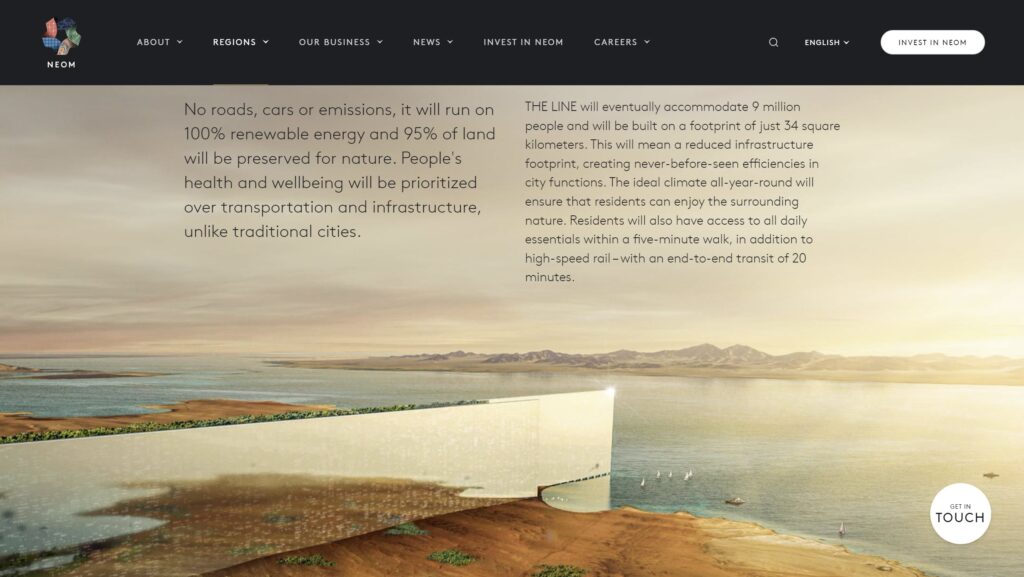
The golden cage – NEOM – The Line in the desert.
Everything is reachable in 5 minutes. But how do you get out when you can no longer afford it?
Conclusion
Anyone who is only interested in convenience and makes the products of the food industry, mostly the chemical industry, their nutritional sources, also has a completely different issue.
Just think about the “why.” Because, according to the motto “follow the money,” this is not about our convenience or our health either. It is about completely different goals. And these become very clear in the video and on the WeForum pages.
Humans as control objects in a digital world. I do not want that. And you?
If you like my contributions and you also value the people involved in your digitalization project, then you are in the right place with me. Simply book a free initial appointment with me and we will discuss how I can support you in your digitalization goals.
To request an appointment, go here to the link.
There are always several reasons why not everything is gold that glitters
Image sources: WeForum, Aldi, neom.com