The dark side of “social media”: distraction, wasted time, and economic damage
LinkedIn is considered the leading career network in German-speaking countries and internationally. Millions of Germans use it every day for professional networking, job searches, consuming business content, or simply as a distraction. However, what may look like productive behavior at first glance often turns out, on closer inspection, to be inefficient time-wasting—with far-reaching consequences, including for Germany’s gross national product (GNP) and significant damage to interpersonal communication culture.
One of the most serious problems is that people on these platforms have become accustomed to talking about one another instead of with one another. Anonymity plays a key role here. Communication culture is steadily losing its standards. After all, it is much easier to publish a text anonymously and without direct consequences than to deliver the exact same message to someone face to face. This is why these platforms often produce pointless, brainless threads that add no value. But why are so many people simply unable to stop—and what damage does this ultimately cause?
Instead of addressing conflicts directly with people, they are simply “reported” or, by now, denounced on the relevant platforms. Not infrequently, this ends with the realization that it is hate speech. A realization that would certainly be different if people communicated with one another face to face.
This development must be regarded as highly concerning.
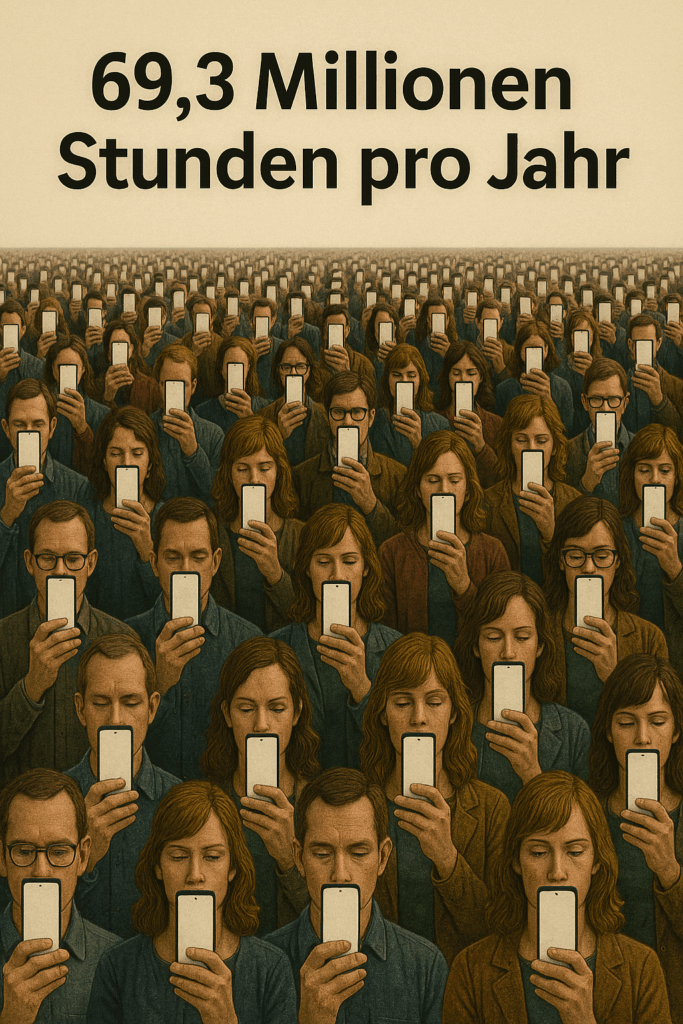
Unimaginable Numbers! (ChatGPT)
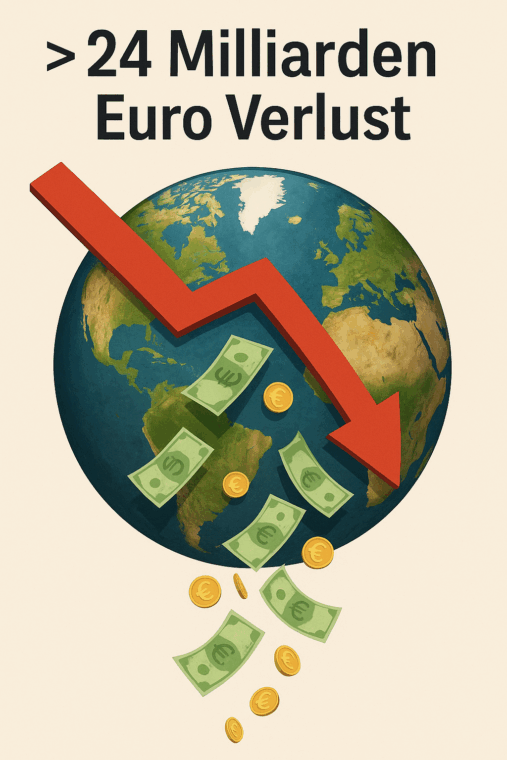
Global losses that are barely measurable! (ChatGPT)
Always be the first to receive the latest news, interviews, and expert articles?
The illusion of “productive networking”
Platforms such as LinkedIn create a sense of productivity that is often deceptive. Many users consume content passively, engage with irrelevant content, or pursue superficial “networking” that rarely results in real business or even personal benefit. Quite the opposite. By now, it can be commercially damaging to comment if you do not meet the other party’s expectations. Pro/contra factions are forming more and more frequently, acting relentlessly and with ever-increasing time expenditure, virtually “against each other” !
In addition, there may be psychological effects such as:
· Dopamine-based reward loops
· Addiction-like usage patterns
· Fear of Missing Out (FOMO)
These mechanisms lead to a constant compulsion to return to the platform—regardless of the actual benefit.
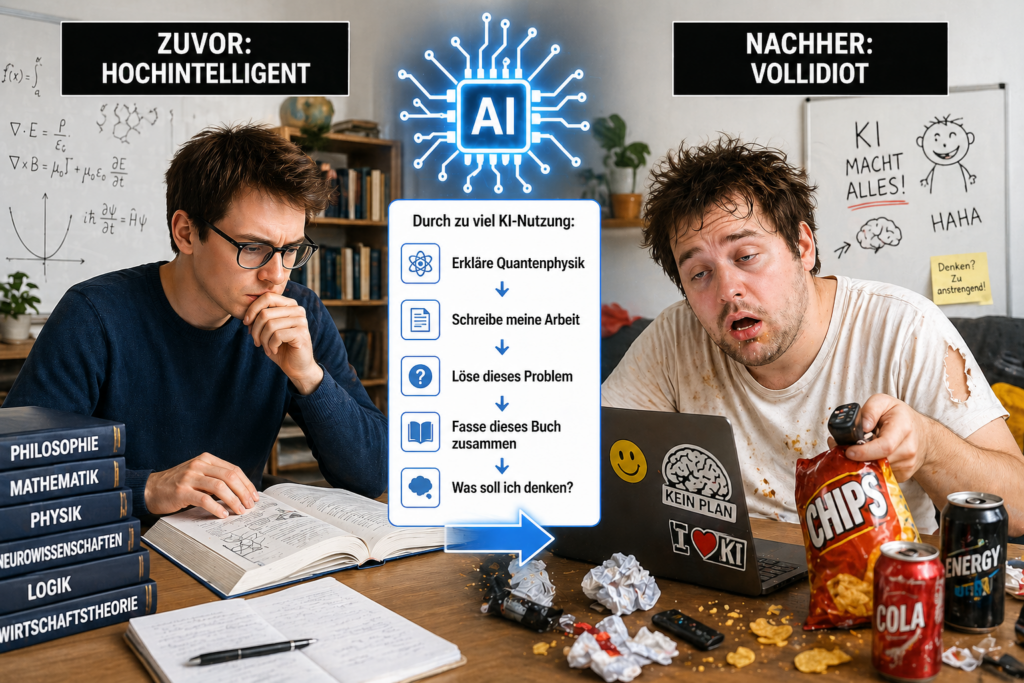
What is concerning is that the amount of content is constantly increasing. Whereas previously, for example, a great deal of human effort was required to create and optimize texts, search for images, etc., more and more content can now be produced with the support of AI—content that wants to be consumed. Many people, in the sense of FOMO feel they have to consume absolutely everything, otherwise they have the feeling of not being sufficiently informed.
Do we need digital discipline?
LinkedIn can undoubtedly be a valuable tool—for careers, recruiting, industry knowledge, and communication. Yet reality shows that the platform is often used inefficiently, and increasingly so. This not only costs individuals time, but also causes measurable economic damage.

Direct communication in the right setting would be much nicer (ChatGPT)
Recommendations
· Companies should define clear usage guidelines
· Private users should develop digital self-discipline
· Policymakers and education should promote media literacy more strongly
Concluding thought
Digitalization promises efficiency—but without conscious action, it quickly becomes a boomerang. LinkedIn and other platforms are not a problem per se, but their unreflective use exemplifies how digital platforms can become silent killers of productivity and communication—with significant costs for society, the economy, and the person behind it.
A global wake-up call
The figure of over €24 billion per year in potentially lost value creation due to inefficient LinkedIn use should alarm policymakers, companies, and users. Platforms such as LinkedIn offer opportunities—but they also entail enormous macroeconomic risks if they become digital distraction machines. Just imagine if at least part of this time and the associated costs were invested in measures that create added value, to make the world a better place for everyone again!
“Interpersonal communication on internet platforms is an illusion. We must return to direct communication to preserve our humanity and use our time in our own positive interest.”
All data values come from ChatGPT research and are intended only as guideline figures!
Image sources: ChatGPT