The fine line between companies and AI
Or: Are all AI users in a company potential leakers of secrets?
The introduction of Artificial Intelligence (AI) undoubtedly has many positive effects on companies and their operations. However, while companies are enthusiastic about the convenience and efficiency gains that AI systems offer, there is also the risk that trade secrets and sensitive data will be disclosed to the AI.
In this post, we take a look at the challenges that convenience brings to companies and how it can potentially become a risk to data security.

The lure of convenience
Integrating AI into companies makes it possible to automate processes, analyze data, and make well-informed decisions. Employees have to spend less time and fewer resources on certain tasks, which increases productivity. However, this convenience also entails risks when it comes to protecting confidential information.
The integration of automated meeting minutes, the generation of expert articles, or documents containing company- and product-specific information and data are good examples of these risks.
Because honestly: Would we publish the information captured there openly on the company website? Hardly. Yet we hand over all this data, completely unprotected, to an AI that learns from it.
Sure, this information is not accessible to EVERYONE, but that is exactly the problem! Who is it accessible to? In the form in which it was captured and prepared in the AI system?

Off we go—just hand over all documents to a “stranger” .
That is exactly what you do when using AI!
Highlighting the relevant aspects
Now to the individual security aspects—after I have hopefully already managed to get one or two people to switch their own intelligence back on and think about the possible consequences.
Insufficient security measures
In the pursuit of efficiency, companies may be tempted to neglect security precautions. This means that not enough thought is given to how trade secrets can be protected from unauthorized access by AI systems.
It is particularly important that not all employees have access to all data, but that access rights are clearly defined and controlled.
Data storage and sharing
AI systems require large amounts of data to function effectively and make better decisions. Companies may be tempted to collect sensitive information in bulk and possibly even share it with external partners or platforms to improve their AI models. However, this carries the risk of data misuse or unauthorized access to trade secrets.

With AI, the “assembled parts” are greater than the whole!
The battle to protect trade secrets
To protect trade secrets and sensitive data from being disclosed to AI systems, companies should take a few important steps:
Defining sensitive data
What exactly is sensitive data? Product test results? Meeting minutes? Job descriptions? Business reports? Analyses?
It is clear that the saying “The whole is more than the sum of its parts” (Aristotle) no longer applies here. Because with the many “parts”, AI is able to generate a completely “new kind of sum” .
That is why the question arises: “Which parts do I pass on to the AI—and by whom?”
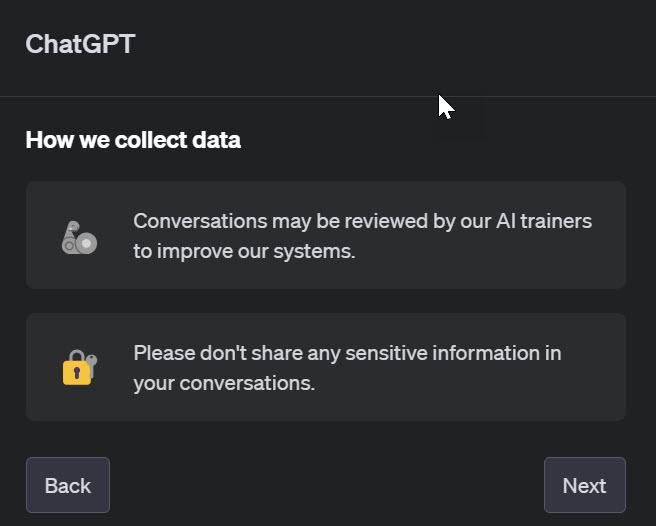
They tell you right in your face when you start. And then we forget it again.
Risk analysis and assessment
Companies must carry out a comprehensive risk analysis to identify potential threats to their trade secrets. All aspects of data security should be considered—from data collection through to storage and processing.
Employees’ security awareness
Employees are often the first line of defense against the theft of trade secrets. Therefore, it is important to raise awareness of data security and offer training to inform and sensitize them to potential threats.
Data protection through technology
Using encryption technologies and access controls can help restrict access to confidential data and protect it from unauthorized access.
Want to receive the latest news, interviews, and expert articles? Then sign up for the newsletter now. You will hear everything first there.

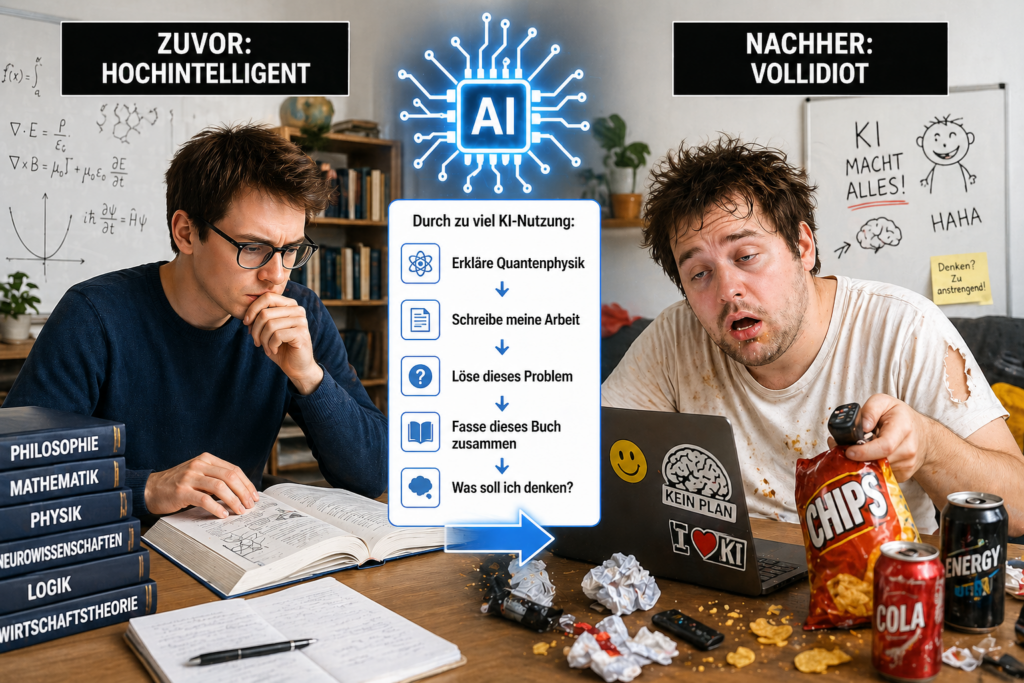
Is this what a potential “leaker of secrets” looks like? Or is it more likely Hans M. from HR?
Conclusion
AI undoubtedly brings many benefits for companies, but convenience must not come at the expense of data security. Companies should be aware that protecting their trade secrets is crucial and take appropriate measures to protect data from unauthorized access and misuse. The right use of AI and the implementation of appropriate security precautions are key to mastering the fine line between convenience and data security and leveraging the benefits of the technology without unwanted side effects.
So ask yourself the following questions:
- Do we even know what sensitive data really is for us?
- Which tools process which data and information?
- Does our concept stand up to internal or external audits?
- How exactly do we train employees on these topics?
- Are our knowledge and skills sufficient, or would it not be better to seek advice from an expert?
If you are unsure and want to minimize the risk in the area of data security or leaking secrets, simply book a free initial appointment with me.
I will be happy to discuss these topics with you.
The temptation is great. Convenience wants it. The “pressure” to digitize demands it. So what now?
Image sources: Shutterstock and ChatGPT