It’s high time for Dell and Getronics to implement a new service management system!
Perhaps you’ll recognize yourself in my experience—here’s my story.
I’ve been a loyal Dell customer for many years. Why? Simple: The service was unbeatable.
No matter where in the world I was—my technical problem was resolved quickly, reliably, and within the maintenance contract. That was true “peace of mind.”
Unfortunately, that was once upon a time.
From Exemplary Service to a Test of Patience
When the integrated camera on my monitor failed for the second time, the case was clear to me:
Request a technician—schedule an appointment—have it replaced—done.
That’s how it used to work.
Reported today, repaired tomorrow. Even somewhere at a customer site in Germany. Impressive, right?
This time, however, Murphy’s Law struck mercilessly:
-
Multiple appointment reschedulings due to parts availability or sick leave.
-
Preferred appointment only schedulable one week in advance.
-
Technician doesn’t show up because the replacement part had already been sent back.
-
Standard SMS messages that had nothing to do with the agreed time—even though I had confirmed the appointment via email.
And the best part:
While cleaning the device, I noticed that the new monitor housing was black instead of dark green.
However, the technician had long since left.
Did he simply not care? I think so. Already upon arrival, he was annoyed—not surprising after a 150 km drive.
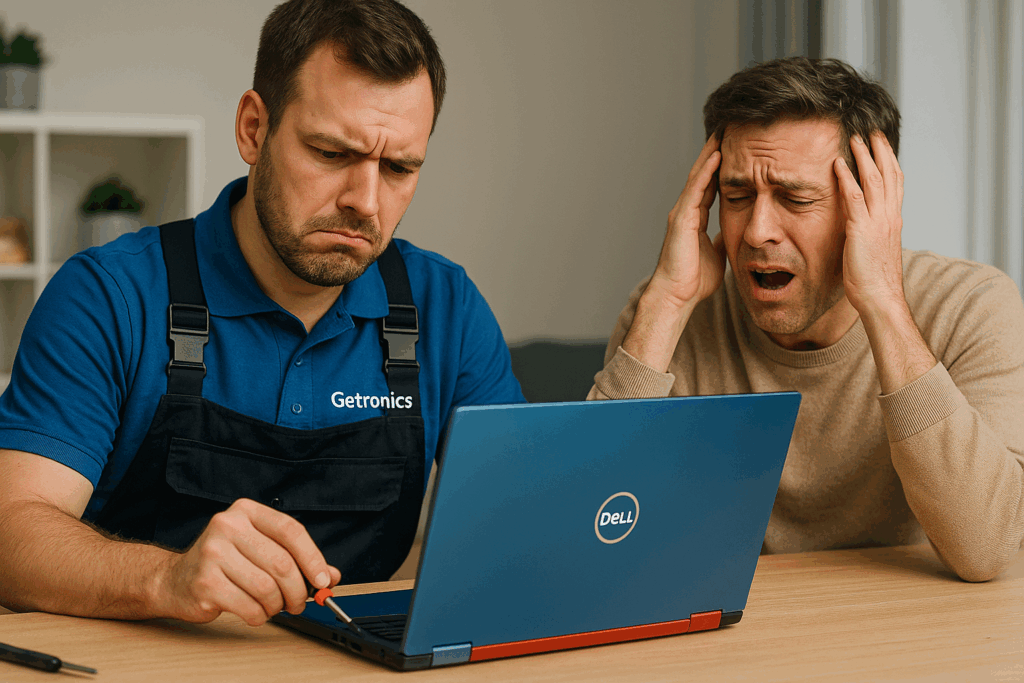
Unimaginable Numbers! (ChatGPT)
Always be the first to receive the latest news, interviews, and expert articles?
Where Does the Real Problem Lie?
After this experience, it’s evident that the interaction between DELL and Getronics has several issues:
- Poor coordination between manufacturer and service partner.
- Planning horizons too short (7 days is simply insufficient).
- Communication via email, SMS, and online portal not synchronized.
- Missing device data (e.g., housing color not taken into account).
- Follow-up reports on active tickets are overlooked or ignored.
- And of course: Staff absences without a functioning backup structure.
These are all problem areas that shouldn’t even arise in a modern service management system.
From Service Leader to IT Dinosaur
I’m certain that Dell already lost money with the first monitor replacement.
But far worse: they’re currently losing their greatest USP—excellent service.
DELL was once a prime example of customer orientation. Today, it appears the company is regressing back to being a service dinosaur.
And yes—I would gladly help Dell optimize these processes, implement modern solutions, and deploy AI strategically.
But realistically speaking: turning around a technology dinosaur without getting “bitten”? Rather difficult.
Also read my blog post: Digitalize, Automate, or Die on the same topic.
And then the crowning moment: DELL claims the black cover is sufficient, that it’s the standard replacement part!!! Why was there a green cover the first time then? Now it gets interesting!
What SMEs Can Learn from This
Small and medium-sized enterprises (SMEs) in particular can learn a lot from this example:
With well-designed digital service management, clear processes, and intelligent automation, you can avoid exactly these kinds of problems.
Because no one wants to become a service dinosaur in the end.
If you want to know how your company can digitalize service processes, automate them, and improve them with AI—
then leverage my experience.
Book a Free Initial Consultation Now
Image sources: ChatGPT – all documentation, emails, and DELL online information are available to the author.